
Choosing an Evergreen Hedge: Laurel, Yew, Holly or Red Robin?
An evergreen hedge gives you screening, privacy and shelter all year. The right one depends on how fast you need it, how formal you want it, and whether animals graze nearby. Here is how the five evergreens we grow at our West Sussex nursery compare.
- Privacy fast: cherry laurel.
- A smart, lower maintenance screen: Portuguese laurel.
- A formal hedge or topiary: yew.
- Security, wildlife or a native hedge: holly.
- Colour: Photinia Red Robin.
At a glance
| Hedge | Growth a year | Best for | Plants per metre | Trim | Watch out for |
|---|---|---|---|---|---|
| Cherry laurel | 30 to 60cm | Fast, dense screening | 2 (50cm apart) | Late summer | Poisonous to livestock |
| Portuguese laurel | 20 to 45cm | A neater, darker screen | 3 to 4 | Late summer | Berries slightly poisonous |
| Yew | Slow | Formal hedges and topiary | 2 to 3 | Late summer | Poisonous to animals |
| Holly | Slow | Security and wildlife | 4 | December | Slow to reach height |
| Photinia Red Robin | About 30cm | Colour and a tidy hedge | 1.3 (75cm apart) | By mid August | Frost can damage new shoots |
Plants per metre are for a single row. See how many hedge plants per metre for every size.

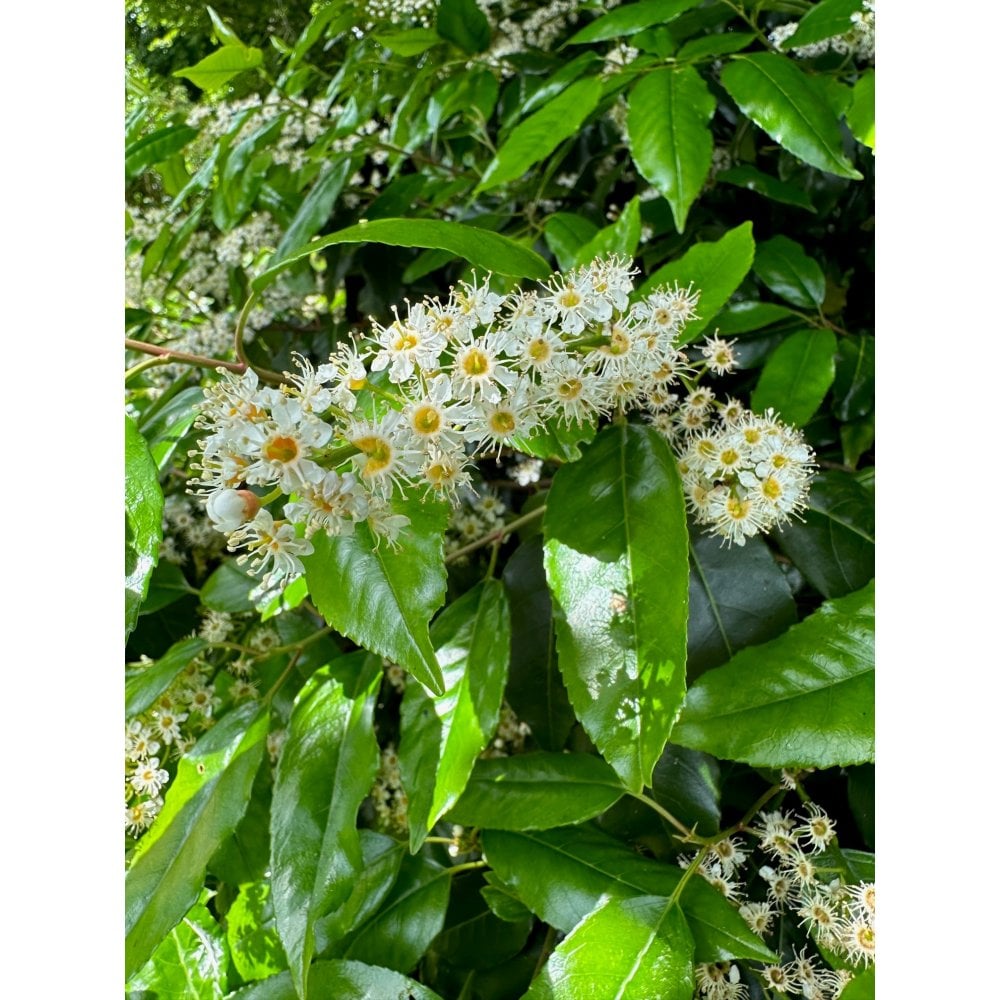
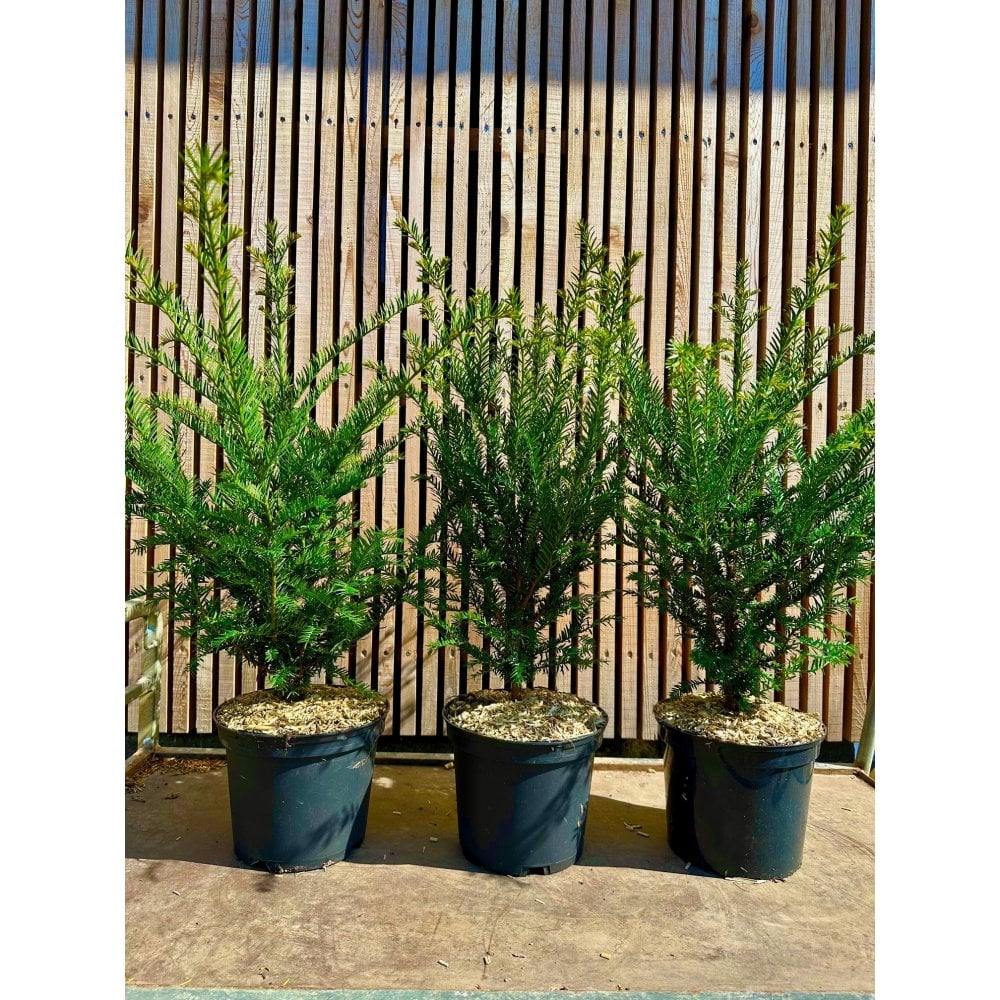


Cherry laurel: the fastest screen
Cherry laurel grows 30 to 60cm a year and has large, glossy leaves that block views, wind and noise. It grows in sun or shade and most well drained soils, including dry ground. It is the quickest way to privacy, but it gets wide, so trim it every late summer. It is poisonous to livestock, so keep it away from fields and paddocks.
Portuguese laurel: a neater laurel
Portuguese laurel has smaller, dark glossy leaves on red stems and grows 20 to 45cm a year. It makes a denser, tidier hedge than cherry laurel and suits sun or part shade. Choose it when you want a smart screen that needs less cutting back.
Yew: the classic formal hedge
Yew is the traditional British formal hedge, with narrow, dark green leaves that make a perfect backdrop to borders. It is slow growing once established but lasts for generations, and it can be cut hard and shaped into topiary. It tolerates shade but not waterlogged soil. All parts are poisonous, so never plant it where animals graze.
Holly: security and wildlife
Native holly has spiny, glossy leaves that make a dense hedge few people or animals will push through. It suits cold and coastal sites, gives birds nesting cover and winter food, and female plants carry red berries. It is slow growing, so it needs little trimming but takes longer to reach height.
Photinia Red Robin: colour all summer
Photinia Red Robin is grown for its bright red new leaves, which last through summer. It grows about 30cm a year and is easy to keep tidy. It likes sun or semi-shade in a sheltered spot, as frost can damage young shoots, so trim it by mid August. Its looser growth makes it less of a secure screen than laurel or holly.
Avoid laurel and yew, which are poisonous. Choose holly or a native mix such as our BN11 Mixed Native Farm Hedging.
Planting your evergreen hedge
Pot grown evergreens can be planted all year when the ground is not frozen or waterlogged. Root balled plants go in from November to May. Water well after planting and through the first dry summer. For spacing and quantities, see how many hedge plants per metre, and for preparing the ground, how to plant a hedge.
Planting a long evergreen hedge?
We grow cherry laurel, Portuguese laurel, yew, holly and Photinia at our West Sussex nursery, with delivery across mainland UK.
For large orders, email sales@millfarmplants.co.uk for a quotation, or call 01798 831008.
Shop evergreen hedgingHow many plants per metreFrequently asked questions
What is the fastest growing evergreen hedge?
Cherry laurel, at 30 to 60cm a year once established.
What is the best evergreen hedge for privacy?
Cherry laurel for speed, or Portuguese laurel for a neater screen.
Which evergreen hedge is safe near horses and livestock?
Avoid laurel and yew, which are poisonous. Holly or a native mix is the safer choice.
What is the difference between cherry and Portuguese laurel?
Cherry laurel has larger, bright green leaves and grows faster. Portuguese laurel has smaller, darker leaves on red stems and makes a neater hedge.
Which evergreen hedge grows in shade?
Cherry laurel, Portuguese laurel, yew and holly all tolerate shade. Photinia prefers sun or semi-shade.
Comments are closed here.