
Evergreen Hedging Plants
Evergreen hedging for privacy, screening and shelter all year, grown at our West Sussex nursery since 1986. Choose from cherry and Portuguese laurel, yew, holly and Photinia Red Robin, plus coastal, conifer and low hedging, in pot grown and root balled sizes.
Everything is grown on our own nursery and sold direct, with no middleman, which keeps our prices low: cherry laurel from £15, Portuguese laurel from £7.80 and yew from £9 a plant.
ORDER BY MONDAY 21 DECEMBER FOR CHRISTMAS DELIVERY
Planting a long hedge? Email sales@millfarmplants.co.uk for a quotation.
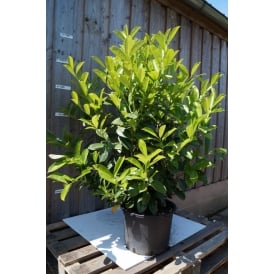
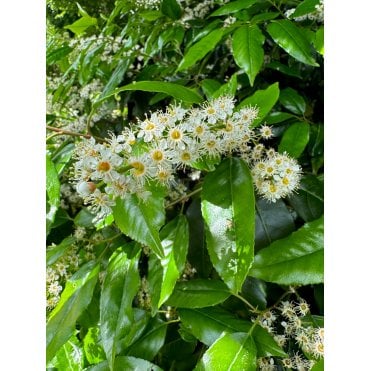
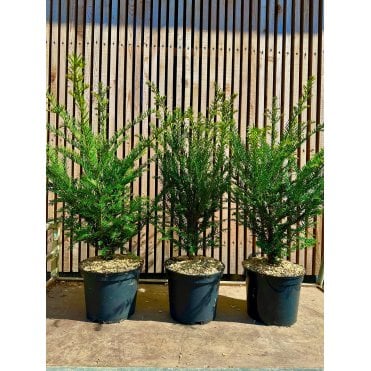
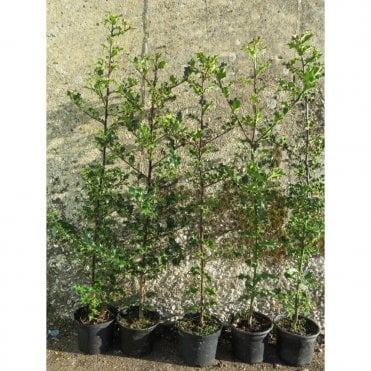
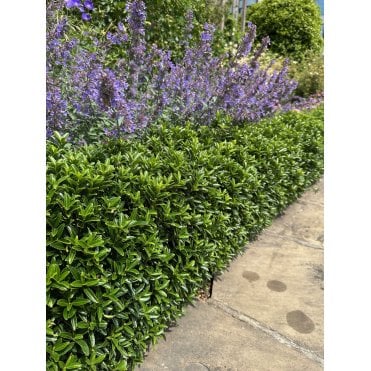
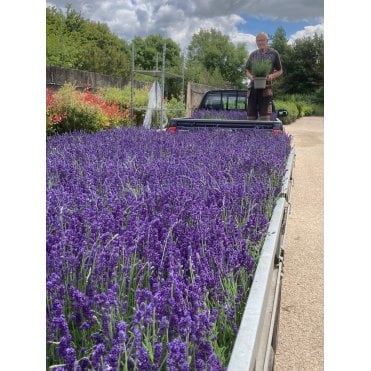
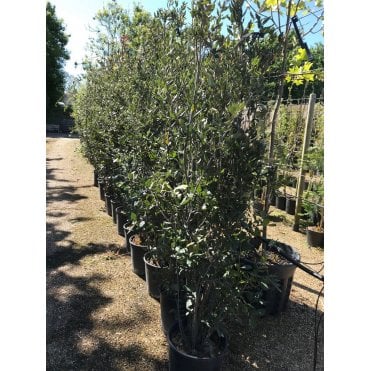
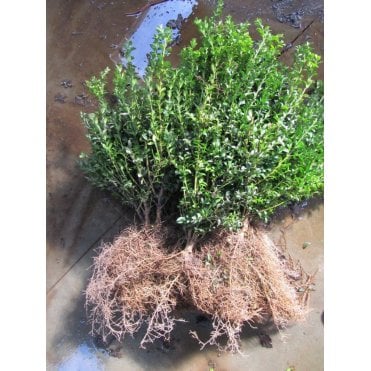
Why our evergreen hedging costs less
We grow our evergreen hedging on our own nursery at Bury in West Sussex and sell it direct to you, with no middleman in between. That keeps our prices low, especially on the larger laurels.
Popular sizes, per plant including VAT:
- Cherry laurel 120 to 150cm: £24.00, or £23.40 each for 50 or more
- Cherry laurel 175 to 200cm, for an instant hedge: £47.40
- Portuguese laurel 80 to 100cm: £17.76
- Yew 80 to 100cm: £15.00
Each product page shows the latest price for every size.
Choosing an evergreen hedge
The right evergreen depends on how quickly you need a screen, how formal you want it to look, and whether animals graze nearby. Our five most popular evergreen hedges:
- Cherry laurel: the fastest dense screen, growing 30 to 60cm a year, in sun or shade.
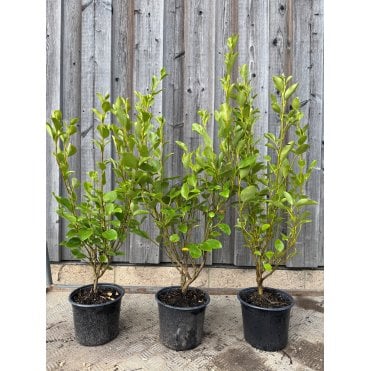
- Portuguese laurel: smaller, darker leaves on red stems, for a neater hedge that needs less trimming.
- Yew: the classic formal hedge and topiary plant, slow growing but long lived.
- Holly: a dense, prickly native hedge for security and wildlife, with winter berries.
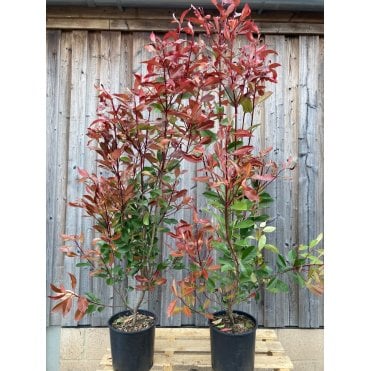
- Photinia Red Robin: bright red new leaves in spring for a hedge with colour.
Our guide to choosing an evergreen hedge compares them side by side.
Coastal and exposed gardens
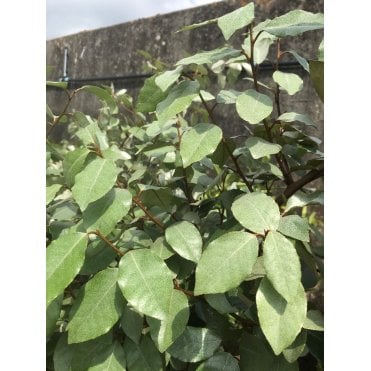
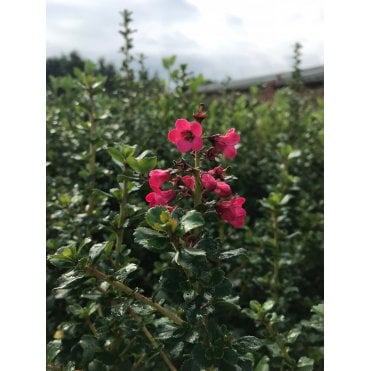
Griselinia, Escallonia and Elaeagnus stand up to wind and salt spray, so they suit coastal and exposed sites. Griselinia has bright apple green leaves, Escallonia flowers through the summer, and Elaeagnus has silvery leaves and scented autumn flowers.
Conifer hedging
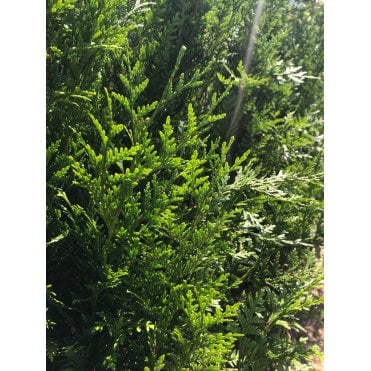
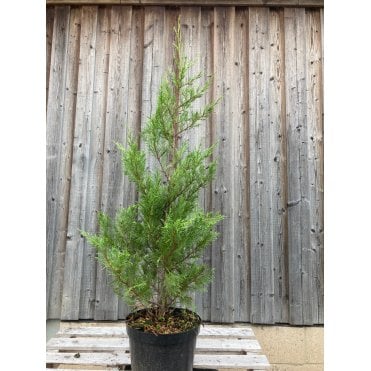
Leyland cypress is the fastest evergreen screen of all, for tall hedges and windbreaks where height matters most. Western red cedar (Thuja plicata) is a softer, aromatic alternative that takes clipping well. Both need regular trimming to stay in shape.
Low hedges and edging
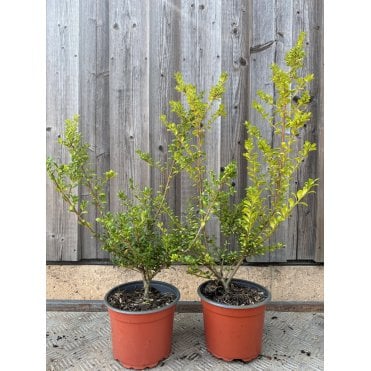
For low hedges, borders and parterres, choose Japanese holly (Ilex crenata), a small leaved alternative to box, or Euonymus Jean Hugues. Pyracantha makes a thorny, berried hedge for security and wildlife.
Pot grown or root balled
Pot grown evergreens can be planted at any time of year when the ground is not frozen or waterlogged. Root balled plants are lifted from the field with soil around the roots and planted from November to March. They are usually the better value for larger sizes and give a more established hedge from the start.
How many evergreen hedge plants per metre
As a guide, for a single row:
- Cherry laurel: 2 per metre for root balled plants, about 1.3 for 20 litre pots.
- Portuguese laurel: 3 per metre for small pots, 2 for 10 litre pots.
- Yew: 3 per metre for pot grown plants, 2 for root balled.
- Holly: 4 per metre.
- Photinia Red Robin: 3 per metre for small pots, 2 for 15 litre pots.
Each product page gives the spacing for every size. See our guide to how many hedge plants you need per metre.
Large orders and delivery
We deliver across mainland UK, with larger orders on a pallet. For long runs of hedge, landscaping projects or estates, email sales@millfarmplants.co.uk with the plants and lengths you need, or call 01798 831008, and we will send a quotation.
Frequently asked questions
What is the fastest growing evergreen hedge?
Leyland cypress is the fastest of all. For a dense, broad leaved screen, cherry laurel is the fastest, at 30 to 60cm a year.
What is the best evergreen hedge for privacy?
Cherry laurel for speed, Portuguese laurel for a neater screen, or yew for a formal hedge.
Which evergreen hedge is best near horses and livestock?
Avoid laurel and yew, which are poisonous to livestock. Holly or a native mix such as our BN11 Mixed Native Farm Hedging is the safer choice.
Which evergreen hedges grow in shade?
Cherry laurel, Portuguese laurel, yew and holly all grow in shade. Photinia Red Robin prefers sun or light shade.
When can I plant an evergreen hedge?
Pot grown plants at any time of year when the ground is not frozen or waterlogged. Root balled plants from November to March.